Scalping: the complete guide to trading short-term without burning out
What scalping really is, why it amplifies risk management mistakes, and the method to practise it without destroying your account.
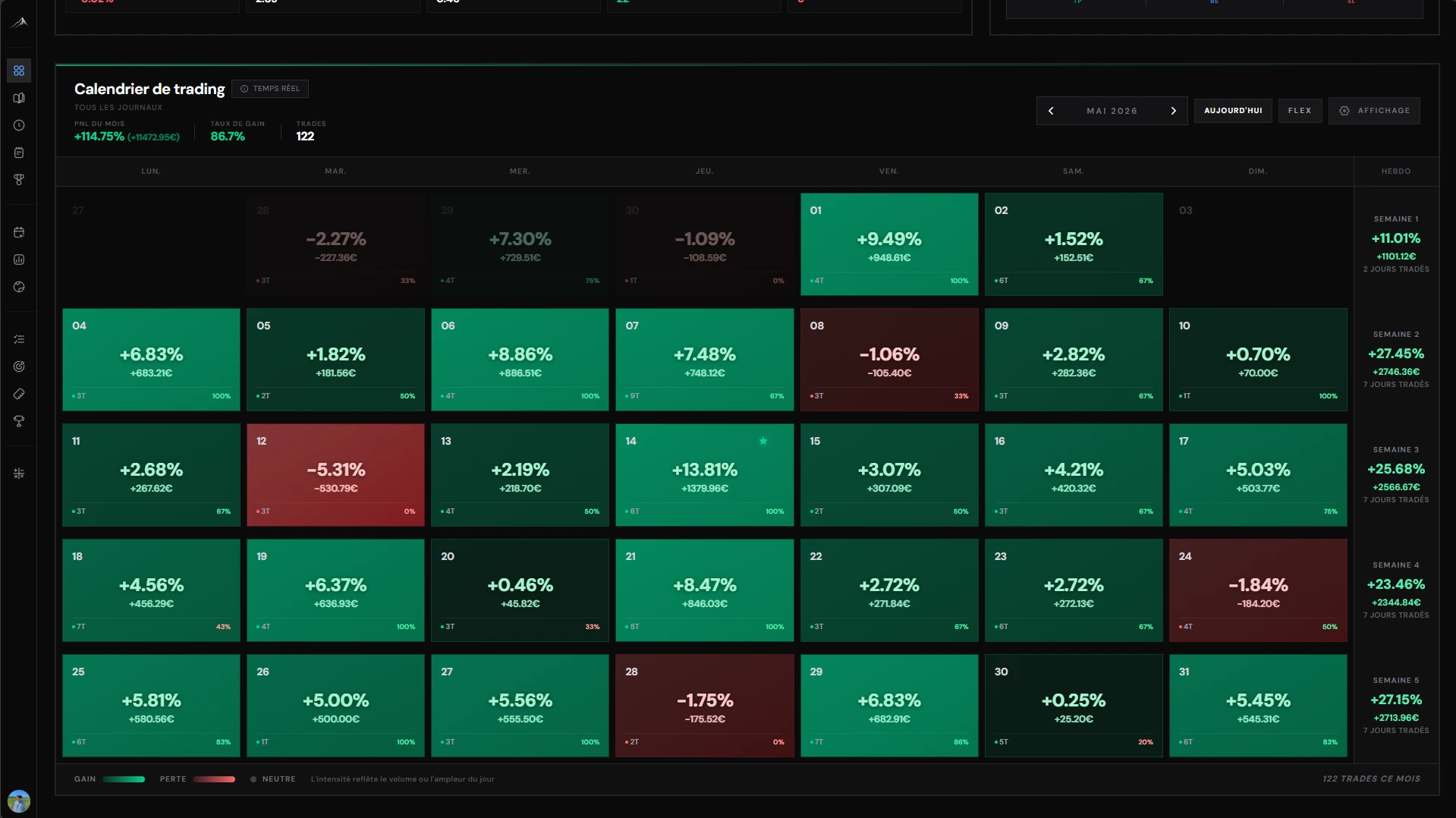
Scalping means taking many very short trades to capture small moves. It looks attractive on paper — plenty of action, quick gains — and is merciless in practice, because it amplifies every weakness.
What scalping amplifies
- Costs: spread and commissions weigh heavily when you multiply trades. A fragile edge is eaten by fees.
- Risk errors: a badly calibrated position size, repeated a hundred times, destroys an account faster than in swing trading.
- Emotional pressure: high frequency leaves little time to think, which encourages revenge trading and overtrading.
Risk management above all
In scalping, risk management is not one chapter among others: it is the subject. A fixed, low risk per trade, precisely calculated, is non-negotiable. A position calculator becomes a reflex — that is what Altiora's risk calculator is for.
Choosing your instruments
Favour liquid instruments with a tight spread (major forex pairs, major indices). A wide spread mechanically cancels the advantage of scalping.
The high-frequency journal
With dozens of trades a day, manual entry is impossible to sustain. This is precisely the case where an automated journal becomes indispensable, as explained in automated vs manual. Without data, a scalper cannot know whether their edge survives the fees.
Staying clear-eyed
Scalping is not a fast lane to profitability; it is a demanding discipline. Before you take it up, measure your discipline with our trading psychology guide. To track high-frequency trades and your statistics automatically, try Altiora for free.
Frequently asked questions
- Is scalping profitable?
- Scalping can be profitable, but it amplifies everything: costs (spread, commissions), risk management errors and emotional pressure. It demands stricter discipline than swing trading, not less.
- Is scalping suitable for beginners?
- Rarely. Scalping requires fast execution and solid emotional control. Most beginners are better off mastering slower timeframes before shortening their horizon.
About the author
L’équipe Altiora
Altiora editorial team
Altiora's editorial team brings together active traders and the product team. We write about discipline, journaling and performance analysis, grounded in how the platform actually works. We never give investment advice.
This content is provided for informational and educational purposes only. It is not investment advice, a recommendation, or an incentive to trade. Trading involves a risk of capital loss. Altiora holds no funds and guarantees no results.