Trading psychology: understanding and correcting behavioural mistakes
Discipline is not a personality trait, it is measurable data. How to identify and correct the biases that sabotage your trading.
Trading psychology is often framed as a matter of "mindset" or willpower. That framing condemns you to repeat the same errors. Discipline is not a fixed character trait: it is an observable behaviour, therefore measurable, therefore correctable. That is the foundation of Altiora — discipline is measured, performance follows.
Why the mind sabotages the plan
Most retail traders have an adequate strategy. What makes them lose is the gap between plan and execution. That gap has precise names:
- FOMO: entering out of fear of missing out, outside your setup.
- Revenge trading: re-entering to "win it back" after a loss. Detailed in how to break the revenge trading spiral.
- Overtrading: stacking positions out of boredom or impatience.
- Cutting winners early: closing a winner too soon out of fear of giving the gains back.
Measure rather than promise
"I'll be more disciplined" does not work. What works: adding a binary column to every trade — "plan followed: yes/no" — then tracking that number over time. When you see that 40% of your losses come from off-plan trades, the correction becomes obvious. The method is in our trading journal guide.
Connecting discipline, habits and results
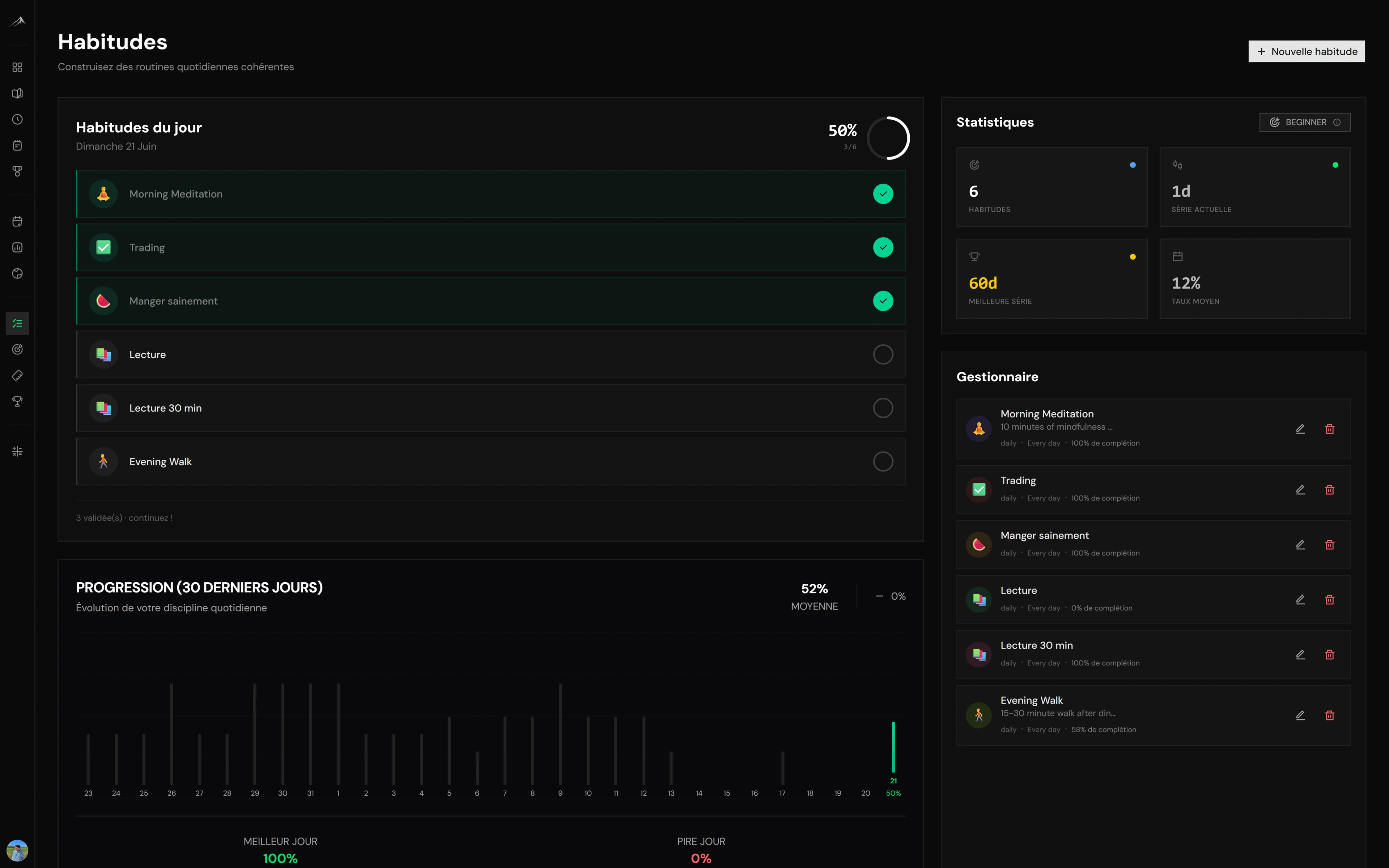
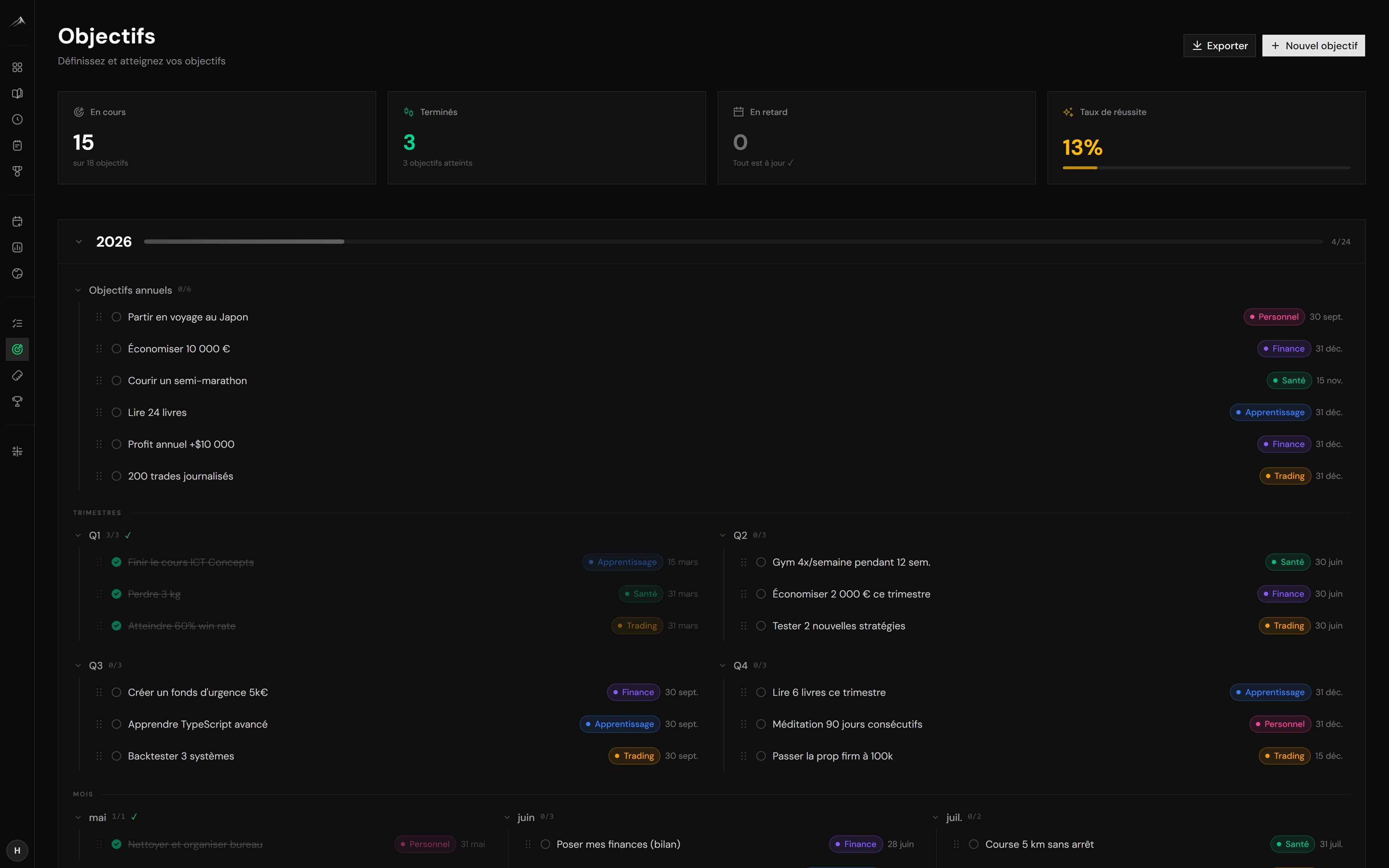
Trading discipline is not isolated from the rest of your life. Sleep, exercise and a stable morning routine all shape your execution. Altiora explicitly ties your habits and goals to your trading results, so those correlations become visible.
Understanding your own triggers
The question is not "am I disciplined?" but "in which situations do I break my discipline?". We dig into that in why I break my trading discipline, and a trader's morning routine helps stabilise your mental state before the open.
Taking action
Start by measuring one single thing: the share of trades taken inside your plan. Try Altiora free for 7 days to track it automatically, or join the community to hold yourself to your routines.
Frequently asked questions
- Does psychology really matter in trading?
- Yes. Most retail traders lose not because their strategy is bad, but because they do not apply it with discipline. Emotions — fear, greed, revenge — degrade the execution of an otherwise valid plan.
- How do you improve trading discipline?
- By making it measurable. Record for every trade whether you followed your plan, track that figure over time, and connect it to your results and your habits. You correct what you measure, not what you promise yourself.
About the author
L’équipe Altiora
Altiora editorial team
Altiora's editorial team brings together active traders and the product team. We write about discipline, journaling and performance analysis, grounded in how the platform actually works. We never give investment advice.
Read next
Overtrading: how to spot it and stop
Overtrading means trading outside the plan, not just clicking too much. Measurable signs, common causes, and a 7-day protocol to bring volume back in line.

Trading plan example: a concrete template you can copy
A useful trading plan fits on one page. Here is a concrete example and a template to adapt, with enough structure to trade without rewriting the rules every session.
Why I break my trading discipline (and how to fix it)
The concrete triggers that push you out of your plan, and a simple method to identify and neutralise them.