Trading journal: the complete guide to getting better
Why keeping a trading journal changes everything, what to record, which statistics to track, and how to move from a manual notebook to automated tracking that actually compounds.
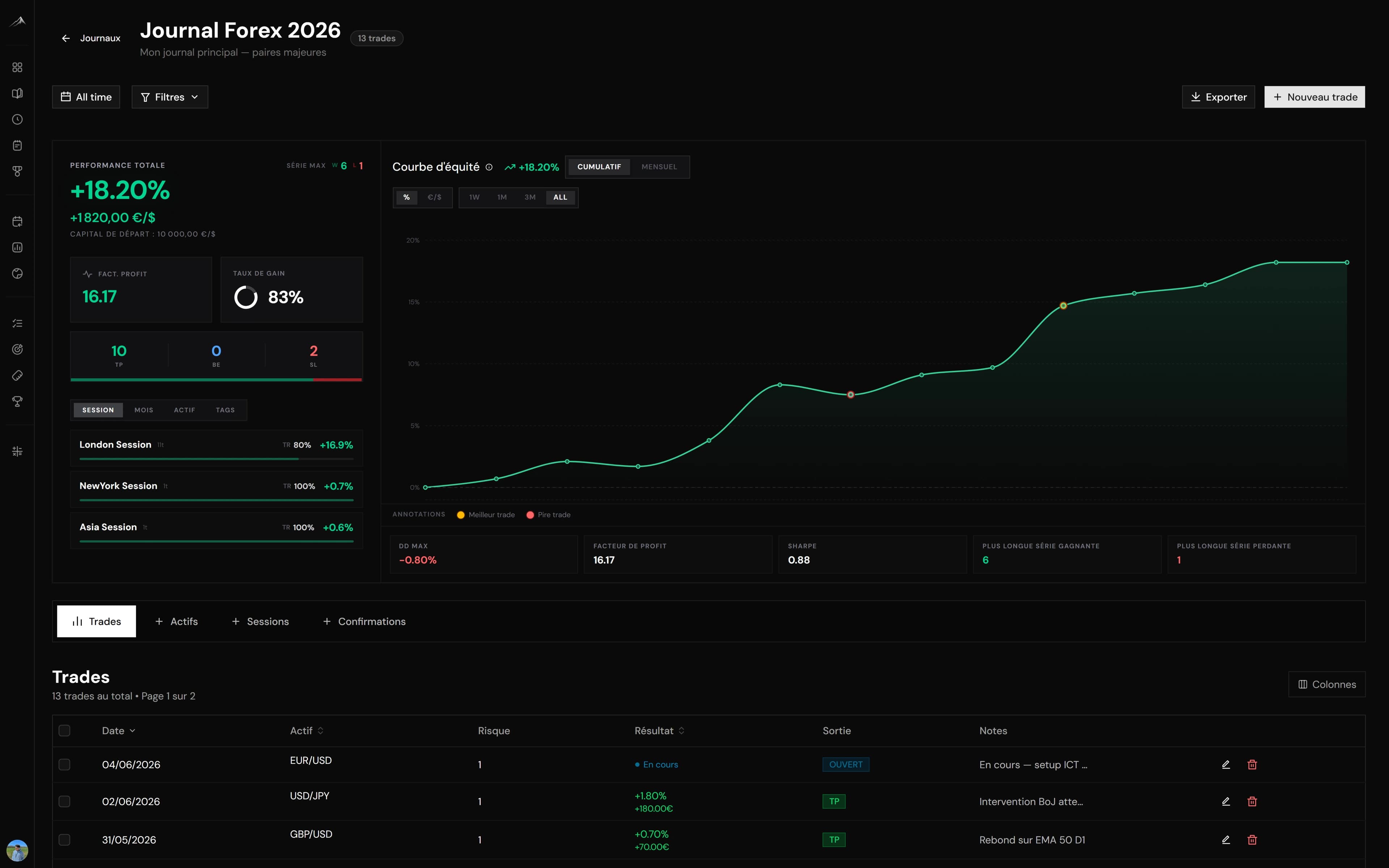
A trading journal is not a sentimental logbook: it is your measuring instrument. Without it you trade blind and repeat the same mistakes without ever naming them. With it, every decision becomes usable data. That is exactly Altiora's philosophy: discipline is measured, performance follows.
This guide covers the essentials: why journal, what to record, which statistics to look at, and how to avoid the trap of the journal you abandon after two weeks.
Why a trading journal makes the difference
Most retail traders don't improve for lack of talent, but for lack of feedback. They take trades, book the result, then move on to the next one. The link between their decisions and their results is never closed.
The journal closes that loop. It answers questions your memory cannot settle honestly:
- Do I actually make money on this setup, or does it just feel that way?
- How do I behave after three losses in a row?
- How much do trades taken outside my plan cost me?
What to record on every trade
There is no need to record everything. Aim for the minimum that makes your trades comparable to one another:
- Context: date, instrument, session, direction (long/short).
- Execution: entry price, stop, target, position size, exit price.
- Result in R: the multiple of your initial risk. A trade risking 1% that returns 2% is worth +2R. This is the metric that makes all your trades comparable, whatever the account size.
- Entry reason: the precise setup, not "it was going up".
- Discipline: did you follow your plan? Yes / No.
- Emotional state: calm, FOMO, revenge, boredom.
To go further on this point, read how to keep an effective trading journal.
The statistics that actually matter
A journal is useless if you never read it. Four numbers are enough to start:
- Win rate: the percentage of winning trades. Useful, but not sufficient on its own.
- Average risk/reward ratio: what you win on average relative to what you risk.
- Expectancy: your average gain per trade, in R. This is the real arbiter.
- Drawdown: the largest fall in your capital from a peak.
These indicators are broken down in which statistics to track in your trading journal.
The trap of the manual journal
A notebook or spreadsheet is an excellent starting point. We even provide a free trading journal template so you can start today.
But manual entry has a hidden cost: friction. After a few dozen trades, re-typing each row becomes a chore, and a journal you abandon is worth nothing. That is where an automated journal takes over. We compare both approaches in automated vs manual trading journal.
Moving to an automated journal
Altiora connects to MetaTrader and cTrader (read-only) to import your trades automatically, then computes your statistics and surfaces the correlations between your discipline, your habits and your results. You spend your time analysing, not typing.
See how the automated journal works, or start your free 7-day trial to connect your first account.
Frequently asked questions
- Why keep a trading journal?
- Because memory is a poor analyst. A journal turns impressions ("I think I lose on news") into verifiable data. It is the only way to objectively identify what works in your trading and what costs you money.
- What should you record in a trading journal?
- At minimum: date, instrument, direction, position size, entry and exit price, result in R (a multiple of your risk), entry reason, emotional state, and whether you followed your plan. Everything else is comfort.
- Is an Excel journal enough?
- To get started, yes. But past a few dozen trades, manual entry becomes a chore you eventually abandon, and the statistics stay limited. An automated journal syncs your trades and computes your metrics without friction.
About the author
L’équipe Altiora
Altiora editorial team
Altiora's editorial team brings together active traders and the product team. We write about discipline, journaling and performance analysis, grounded in how the platform actually works. We never give investment advice.
Read next
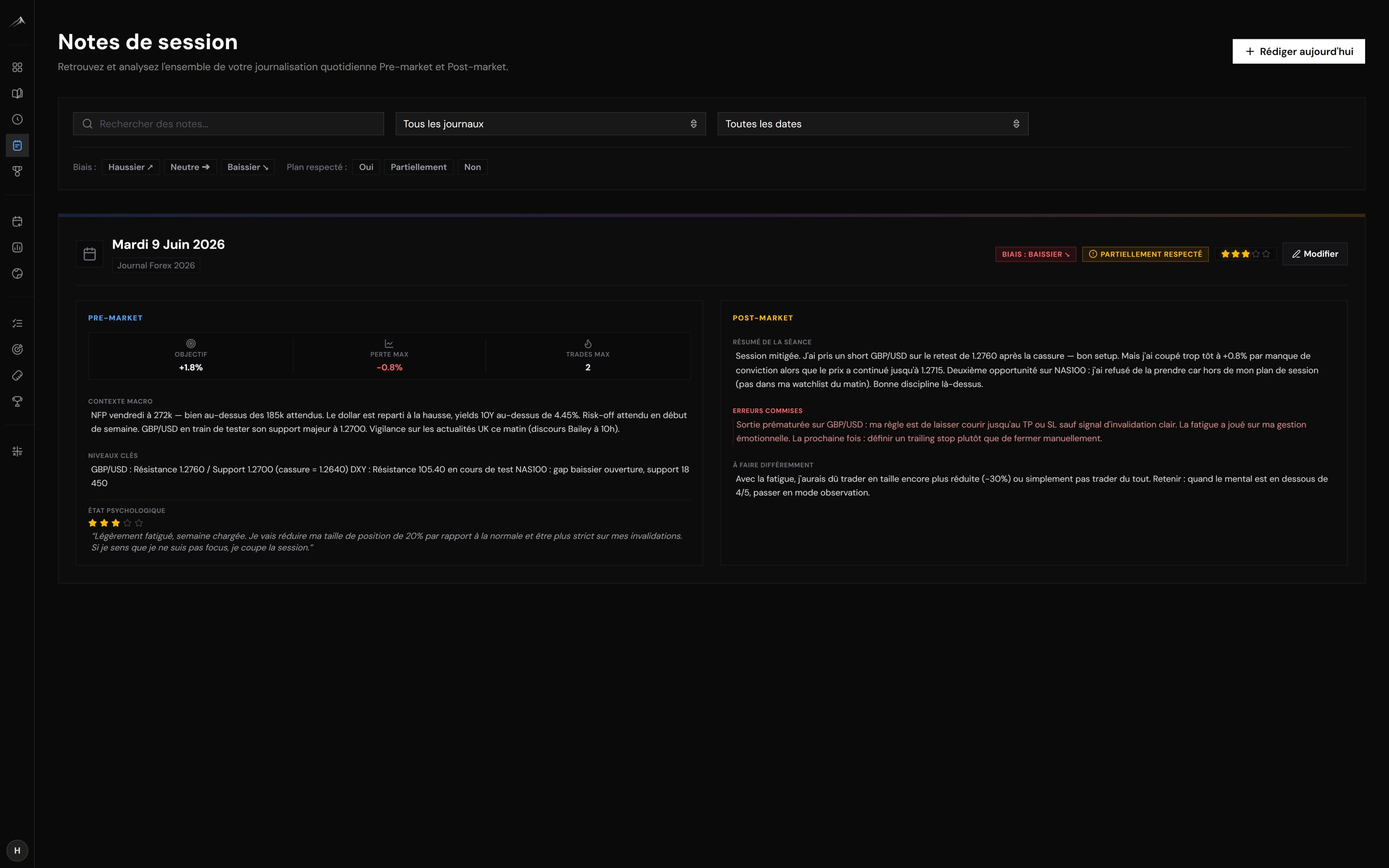
How to keep an effective trading journal (beginner guide)
The step-by-step method for a trading journal you will not drop: what to record, when to fill it in, and how to review it so it actually makes you better.
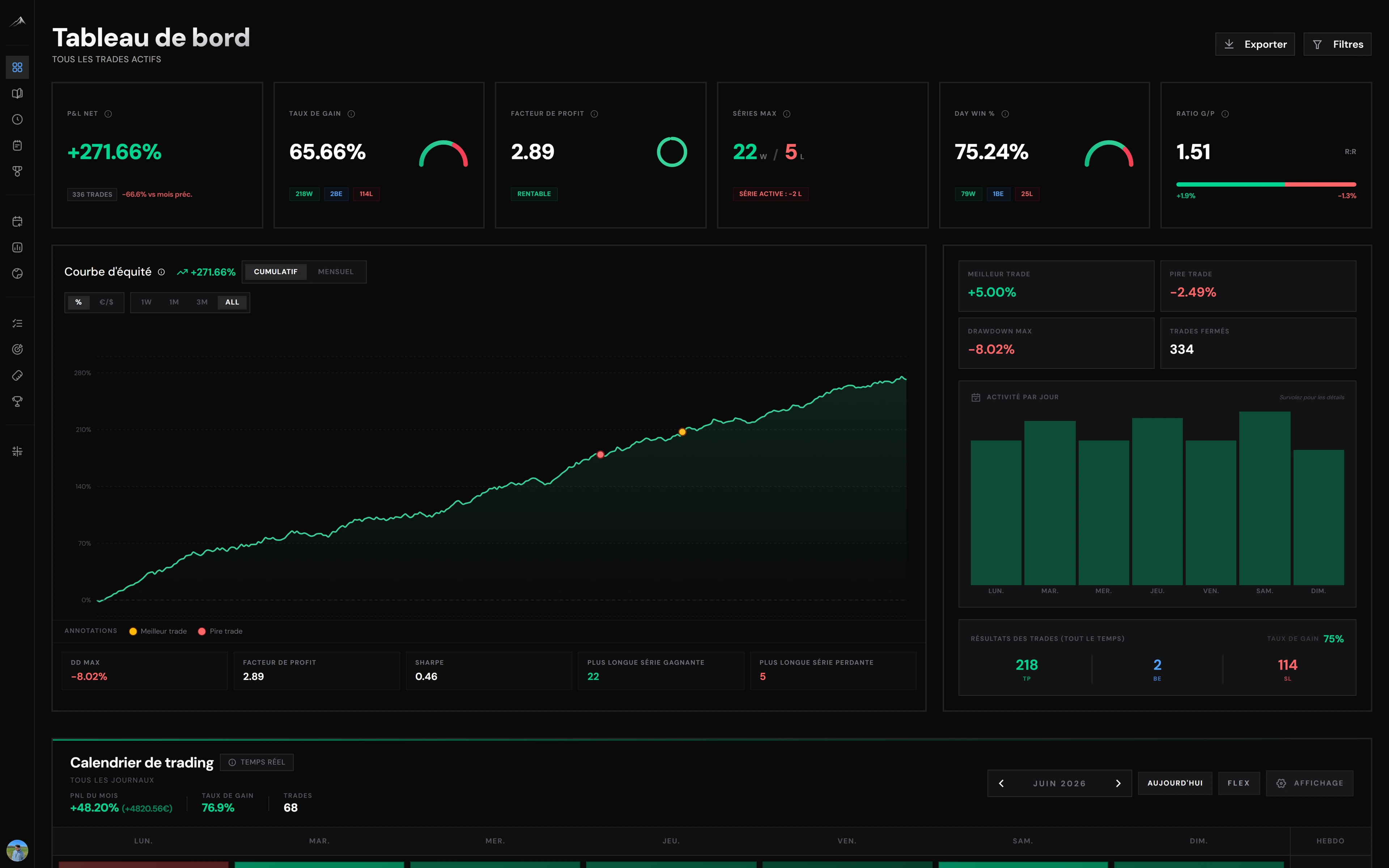
Automated vs manual trading journal: which should you choose?
Notebook, spreadsheet or automated journal: the strengths, the limits and the hidden cost of each approach, so you can choose with your eyes open.
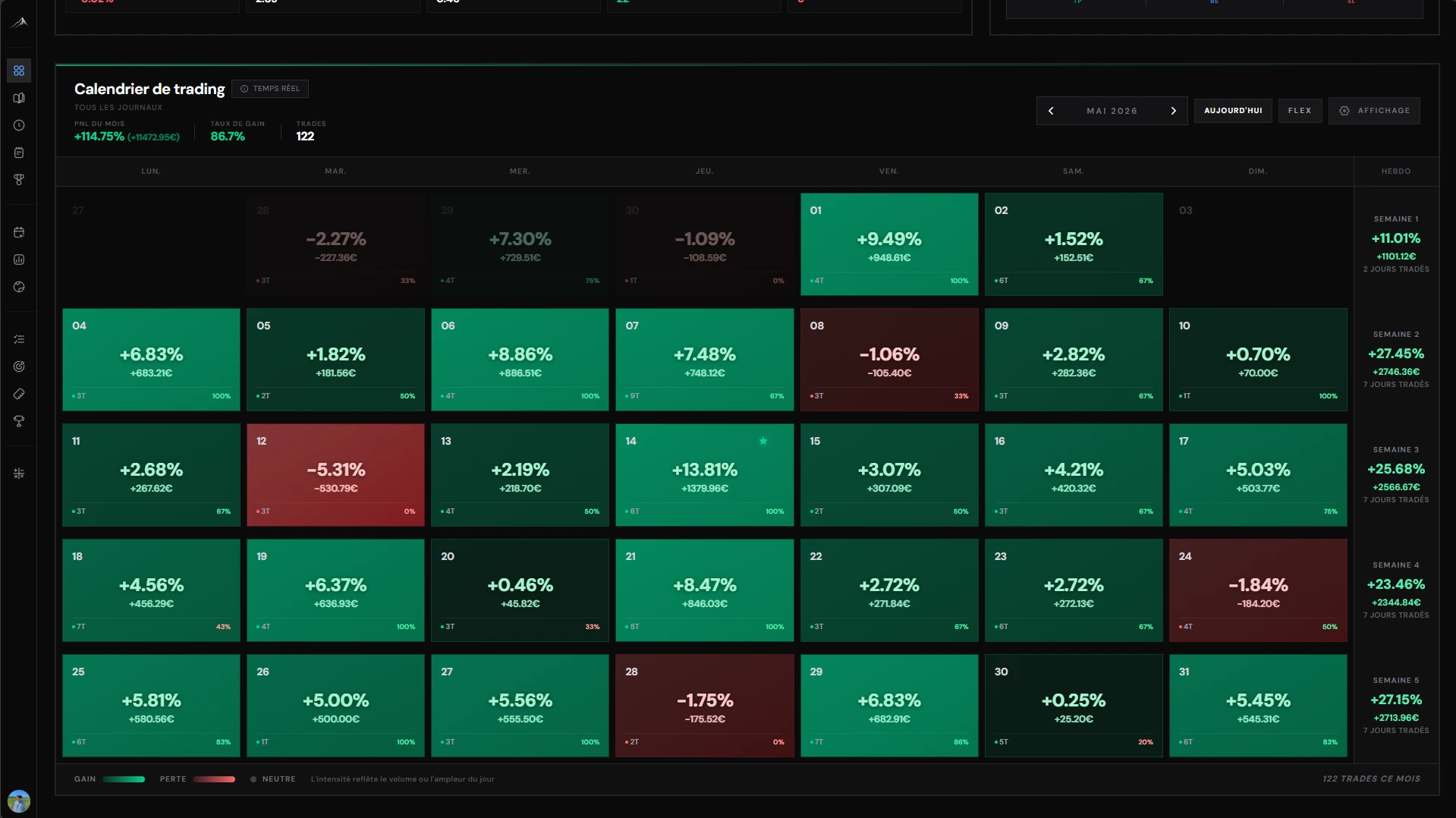
Which statistics to track in your trading journal
Win rate, expectancy, risk/reward ratio, drawdown: what each metric really says about your trading, and which one to watch first.