How to keep an effective trading journal (beginner guide)
The step-by-step method for a trading journal you will not drop: what to record, when to fill it in, and how to review it so it actually makes you better.
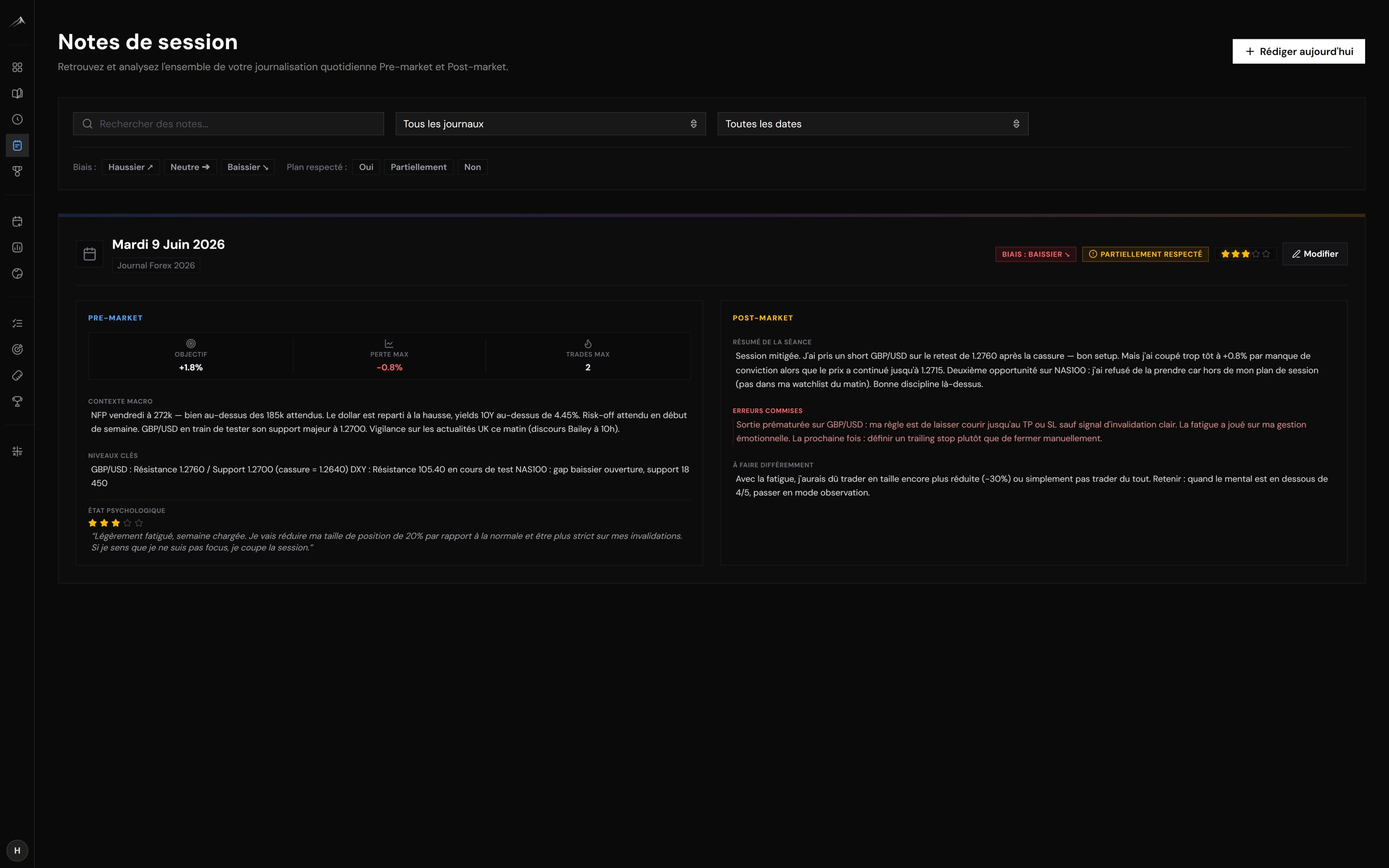
Keeping a trading journal is easy to understand and hard to sustain. The difference between a useful journal and an abandoned one comes down to a handful of concrete rules.
1. Fill it in at the right moment
Write your entry reason before you take the trade, not after. That is the only way to avoid rewriting history once you know the outcome. The rest — exit, result, emotion — is filled in at the close.
2. Keep the discipline field binary
For every trade, one question: did I follow my plan, yes or no? A winning trade taken outside the plan is a bad trade. That single column will teach you more about yourself than any technical analysis.
3. Think in R, not in euros
Express every result as a multiple of risk (R). A €5,000 account and a €50,000 account following the same plan have the same curve in R. That is what makes your trades comparable over time. This point is central to our complete trading journal guide.
4. Review every week
A journal you never re-read is a graveyard of data. Block 20 minutes at the weekend and answer three questions:
- Which setup performed best this week?
- Where did I break my plan, and why?
- What am I concretely changing next week?
5. Reduce the friction
The best journal is the one you actually keep. If manual entry discourages you, automate the import of your trades. Altiora syncs your fills from MetaTrader and cTrader and computes your statistics automatically — try it free for 7 days.
About the author
L’équipe Altiora
Altiora editorial team
Altiora's editorial team brings together active traders and the product team. We write about discipline, journaling and performance analysis, grounded in how the platform actually works. We never give investment advice.
Read next
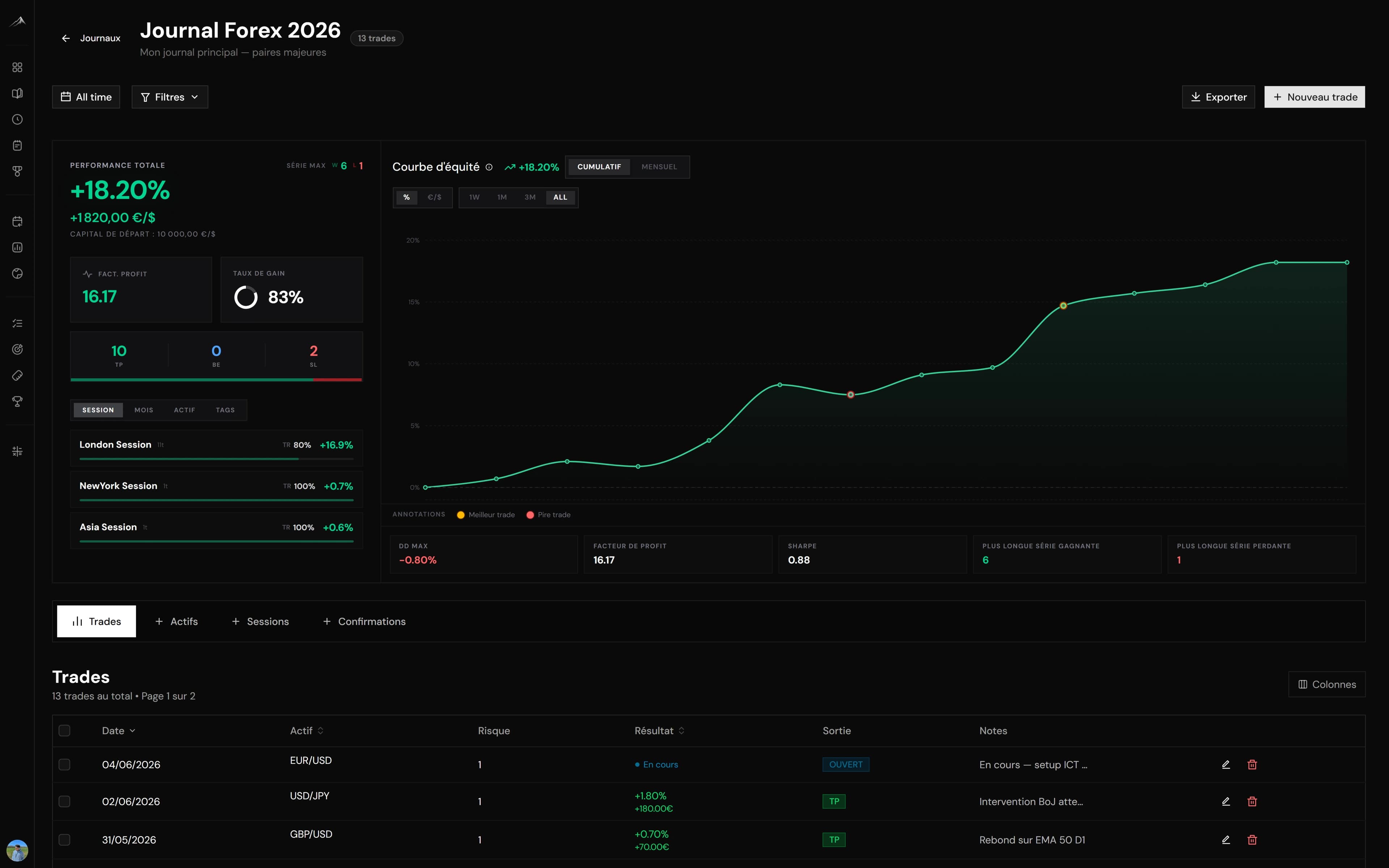
Trading journal: the complete guide to getting better
Why keeping a trading journal changes everything, what to record, which statistics to track, and how to move from a manual notebook to automated tracking that actually compounds.
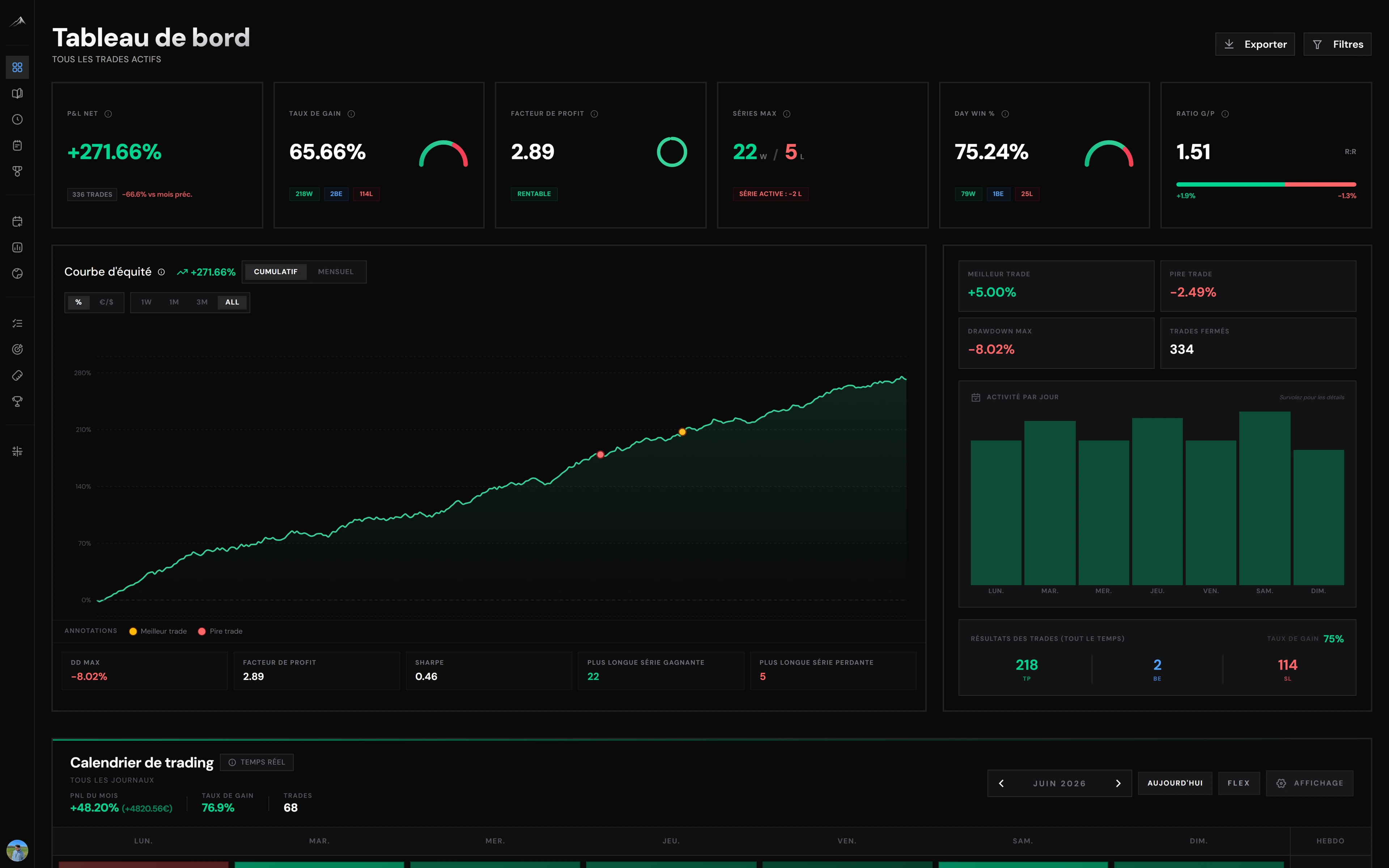
Automated vs manual trading journal: which should you choose?
Notebook, spreadsheet or automated journal: the strengths, the limits and the hidden cost of each approach, so you can choose with your eyes open.
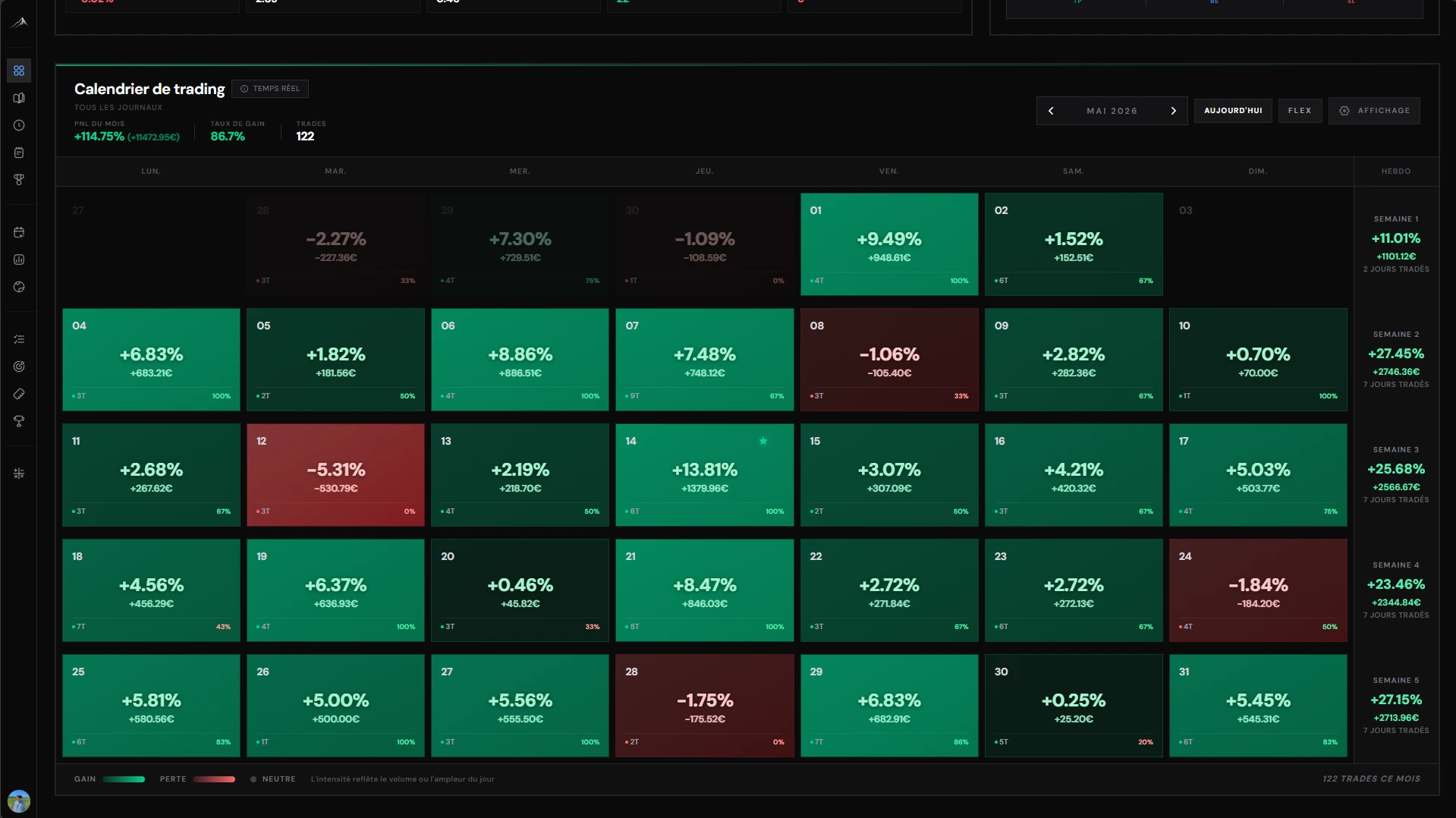
Which statistics to track in your trading journal
Win rate, expectancy, risk/reward ratio, drawdown: what each metric really says about your trading, and which one to watch first.