Overtrading: how to spot it and stop
Overtrading means trading outside the plan, not just clicking too much. Measurable signs, common causes, and a 7-day protocol to bring volume back in line.

Overtrading means trading more than your plan allows, not just "clicking a lot". Three off-setup trades on a quiet session already count. The day can finish green while the process erodes. In a challenge, off-plan volume pulls you toward the daily loss without the setup changing. On a personal account, it dilutes average R and makes the review unreadable. Here is how to spot it with numbers, not vibes, and what to change.
What overtrading is not
It is not "being active". A scalper can take twenty trades inside the plan. A swing trader can take two. The test is the gap vs written rules: allowed setups, max trades per day, stop after X losses, allowed sessions. If those rules do not exist, start with a trading plan example. Without a ceiling, any volume feels justified.
It is also not only revenge trading. Revenge starts from a loss. Overtrading often starts from boredom, FOMO, or a winning session you want to stretch. They feed each other, but the fix differs.
Measurable signs (not "I feel it")
Over 10 sessions, count:
- Off-setup trades: tag or note "off plan". Above 20%, the issue is not the strategy.
- Trades after the daily stop: if the rule is −1.5% = done for the day and you keep going, that is process overtrading.
- Time between trades: entries 2-3 minutes apart with no new setup = reaction, not analysis.
- Volume vs median: a day at 2× your median trade count with no major news deserves a context note (boredom, FOMO, "I feel sharp").
- Empty entry reason: a trade with no sentence written before the click is an overtrading candidate.
This is what the journal is for: tag filters, trades per day, session notes. Without that, you argue with memory. In Altiora, those three fields (off-plan tag, day volume, session note) sit on each trade; the weekly review shows % off plan without a spreadsheet.
Why it happens (useful mechanisms)
Boredom in a range. Nothing is given, the finger clicks anyway. Fix: allowed session + "if no setup in 90 minutes, screen off".
FOMO on one candle. Fix: invalidation written before entry (see the plan). No entry "because it is running".
Winning streak. Ego rises, size sometimes too. Fix: same risk per trade (money management), trade ceiling even on green days.
After a loss. Here you meet revenge. Fix: timer pause (30 minutes), not a "small trade to get flat".
These causes show up in session notes. If you write nothing, you replay the same film.
7-day cut protocol
Day 1-2: write max trades / day and max losses before stop. Example: 3 trades, or 2 losses = done.
Try 7 days - card required, no charge if you cancel before day 7
Day 3-5: every trade carries (1) named setup, (2) plan followed yes/no, (3) one reason sentence. No trade without those three fields.
Day 6-7: compute % off plan and how many days the ceiling broke. Target: off plan < 10%, ceiling held 5 days / 7.
If the ceiling still breaks, lower it one notch for a week. The goal is not "trade less for fun". It is to make volume match the plan.
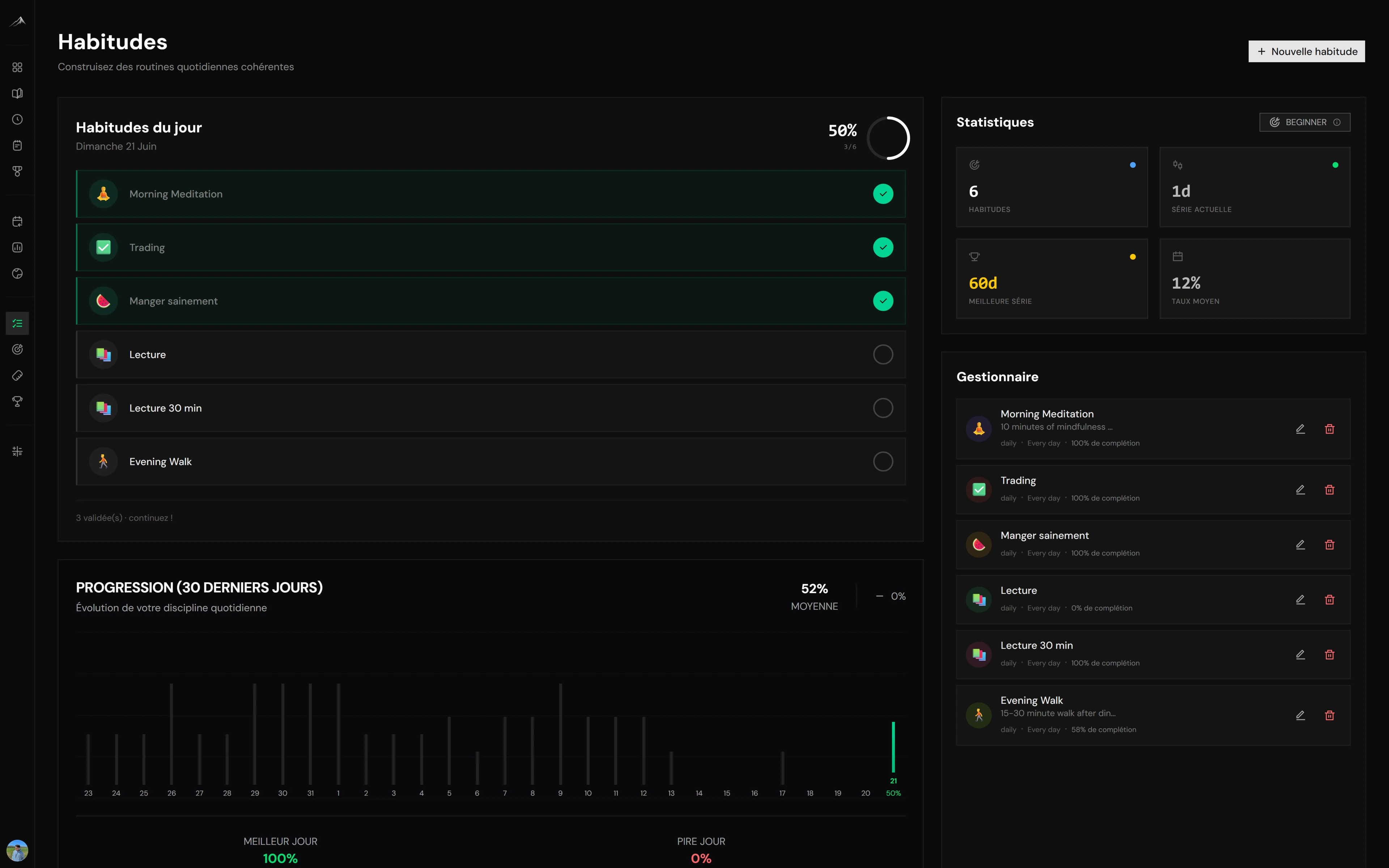
In Altiora, that tracking runs through the journal (tags, notes, setup filters) and can pair with habits: at session end, a "ceiling held yes/no" entry (habit or note) to anchor the review streak. Less mental debate, more counter.
Create an account - 7-day trial (7-day trial - card required, no charge if you cancel before day 7). Features: /features.
Frequently asked questions
- What is overtrading?
- Trading beyond the written plan rules (volume, setups, daily stop), even if the day finishes green.
- How do I know if I overtrade?
- Over 10 sessions, count off-setup trades, trades after the daily stop, and days at 2× your median volume.
- Is overtrading the same as revenge trading?
- No. Revenge starts from a loss. Overtrading often starts from boredom, FOMO, or stretching a winning session.
- What trade limit per day should I use?
- Whatever your plan says. A common starting point: 2-3 trades, or stop after 2 losses, then adjust with stats.
About the author
L’équipe Altiora
Altiora editorial team
Altiora's editorial team brings together active traders and the product team. We write about discipline, journaling and performance analysis, grounded in how the platform actually works. We never give investment advice.
Read next

Trading plan example: a concrete template you can copy
A useful trading plan fits on one page. Here is a concrete example and a template to adapt, with enough structure to trade without rewriting the rules every session.
Trading psychology: understanding and correcting behavioural mistakes
Discipline is not a personality trait, it is measurable data. How to identify and correct the biases that sabotage your trading.
Why I break my trading discipline (and how to fix it)
The concrete triggers that push you out of your plan, and a simple method to identify and neutralise them.