Comment tenir un journal de trading efficace (guide débutant)
La méthode pas à pas pour tenir un journal de trading que vous ne lâcherez pas : quoi noter, quand le remplir, et comment le relire pour progresser.
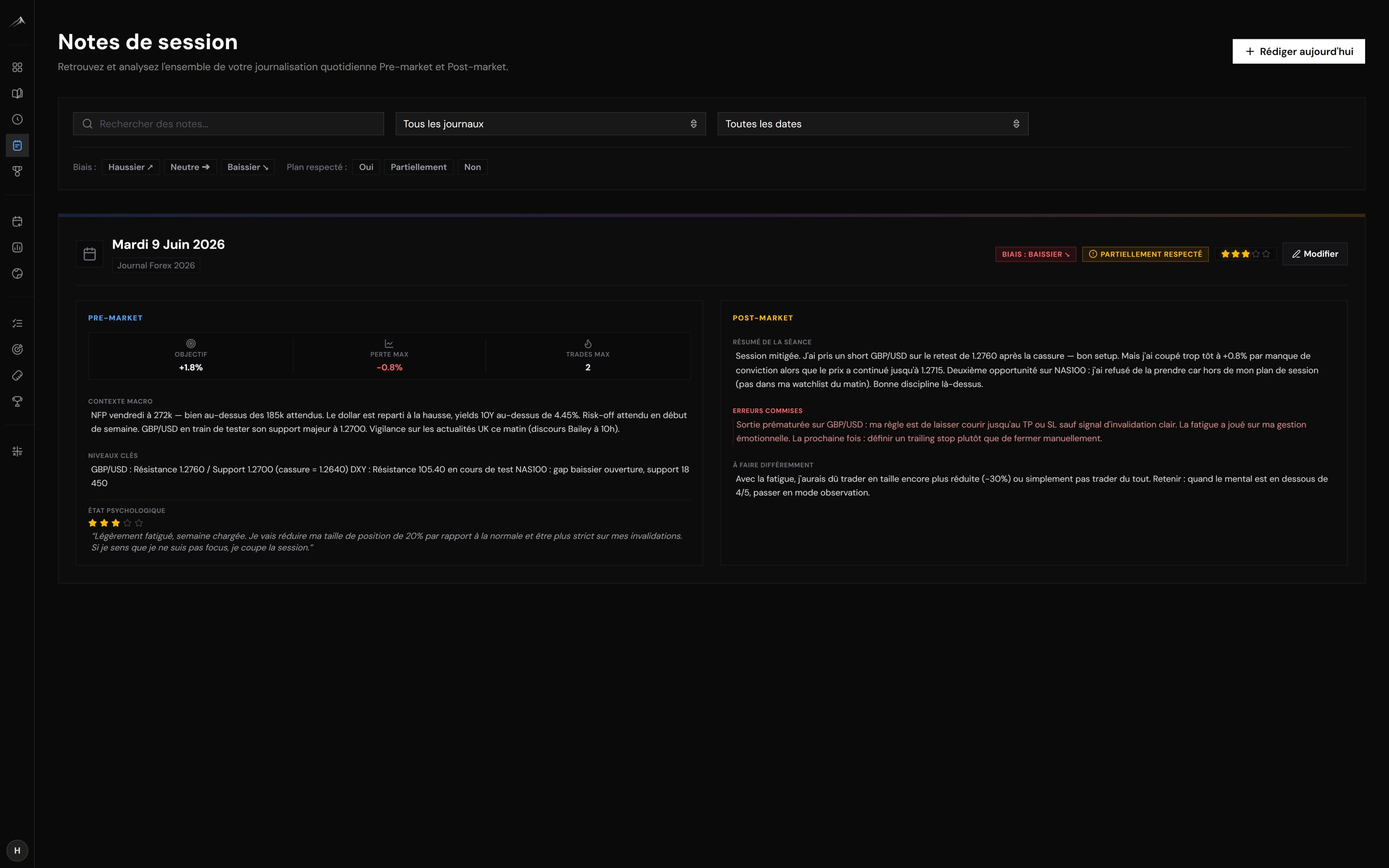
Tenir un journal de trading est simple à comprendre et difficile à maintenir. La différence entre un journal utile et un journal abandonné tient à quelques règles concrètes.
1. Remplissez-le au bon moment
Notez votre raison d'entrée avant de prendre le trade, pas après. C'est le seul moyen d'éviter de réécrire l'histoire une fois le résultat connu. Le reste (sortie, résultat, émotion) se remplit à la clôture.
2. Gardez le champ discipline binaire
Pour chaque trade, une seule question : ai-je respecté mon plan, oui ou non ? Un trade gagnant pris hors plan est un mauvais trade. Cette colonne, seule, vous apprendra plus sur vous que n'importe quelle analyse technique.
3. Raisonnez en R, pas en euros
Exprimez chaque résultat en multiple du risque (R). Un compte de 5 000 € et un compte de 50 000 € qui suivent le même plan ont la même courbe en R. C'est ce qui rend vos trades comparables dans le temps. Ce point est central dans notre guide complet du journal de trading.
4. Relisez chaque semaine
Un journal qu'on ne relit pas est un cimetière de données. Bloquez 20 minutes le week-end pour répondre à trois questions :
- Quel setup a le mieux performé cette semaine ?
- Où ai-je cassé mon plan, et pourquoi ?
- Qu'est-ce que je change concrètement la semaine prochaine ?
5. Réduisez la friction
Le meilleur journal est celui que vous tenez réellement. Si la saisie manuelle vous décourage, automatisez l'import de vos trades. Altiora synchronise vos exécutions depuis MetaTrader et cTrader et calcule vos statistiques automatiquement — essayez-le gratuitement 7 jours.
À propos de l’auteur
L’équipe Altiora
Rédaction Altiora
L'équipe éditoriale d'Altiora réunit des traders actifs et l'équipe produit. Nous écrivons sur la discipline, la journalisation et l'analyse de performance, en nous appuyant sur les mécaniques réelles de la plateforme. Nous ne donnons jamais de conseil en investissement.
À lire ensuite
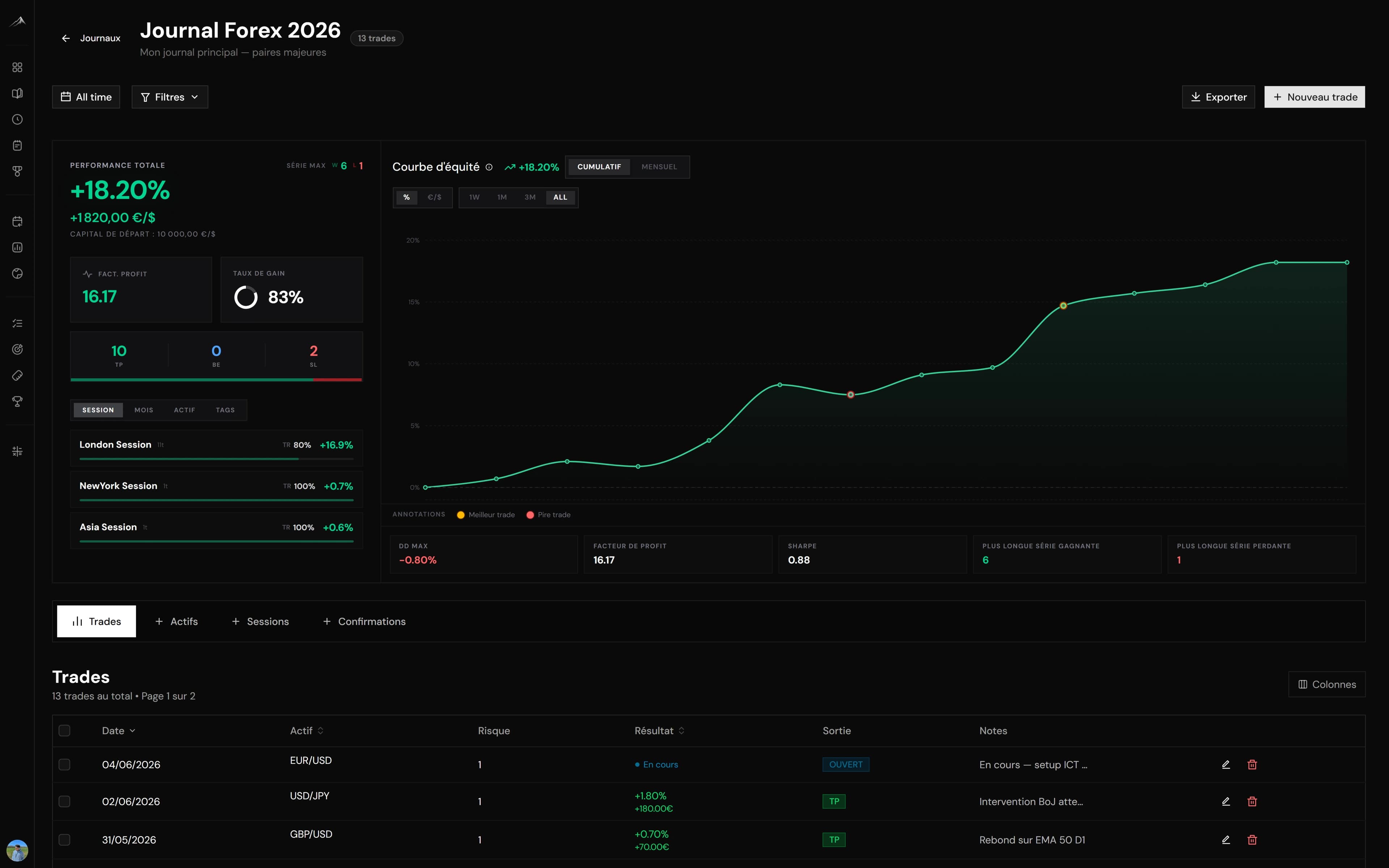
Journal de trading : le guide complet pour progresser
Pourquoi tenir un journal de trading change tout, quoi y consigner, quelles statistiques suivre et comment passer d'un carnet manuel à un suivi automatisé qui fait vraiment progresser.
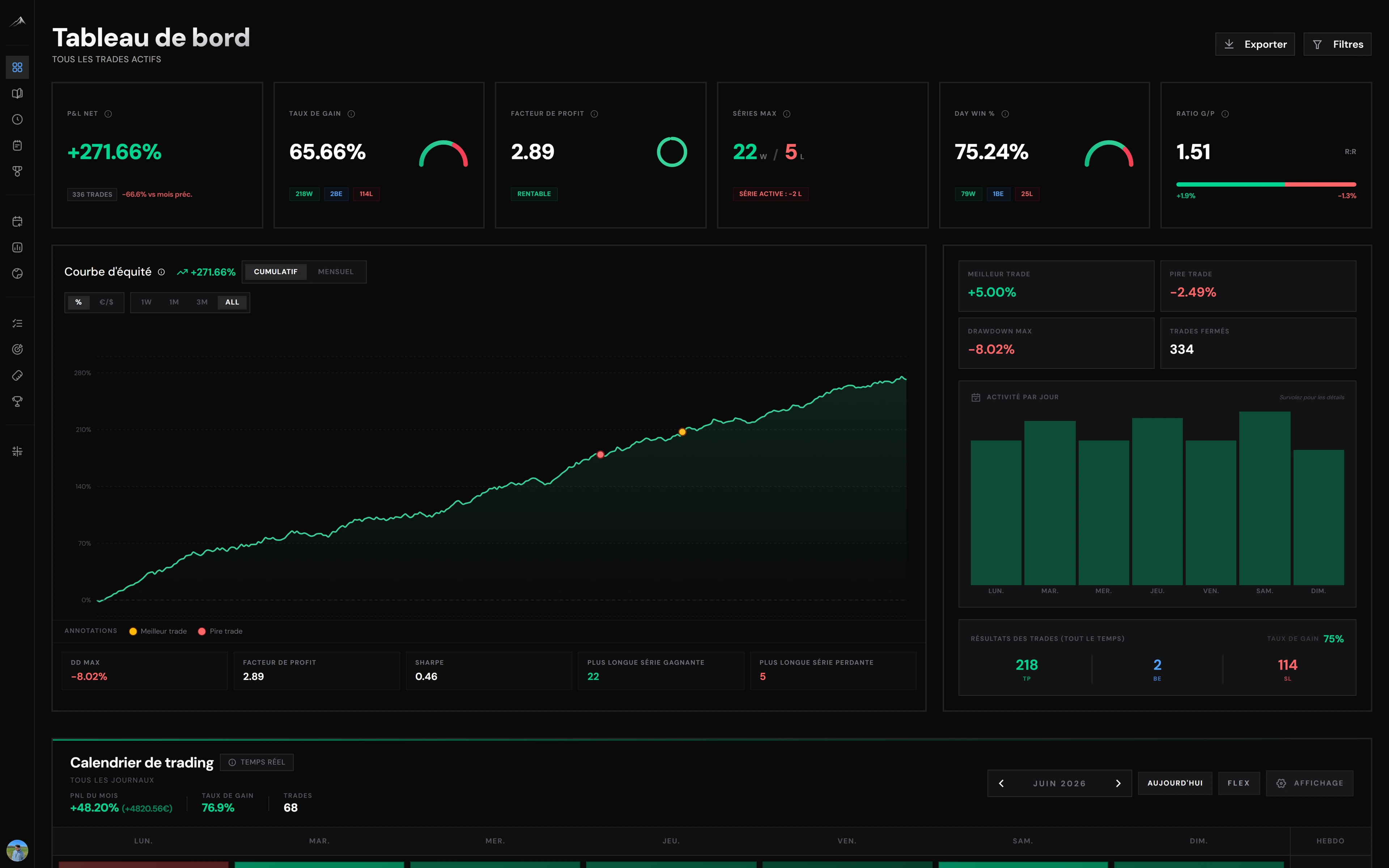
Journal de trading automatisé vs manuel : que choisir ?
Carnet, Excel ou journal automatisé : les avantages, les limites et le coût caché de chaque approche pour choisir en connaissance de cause.
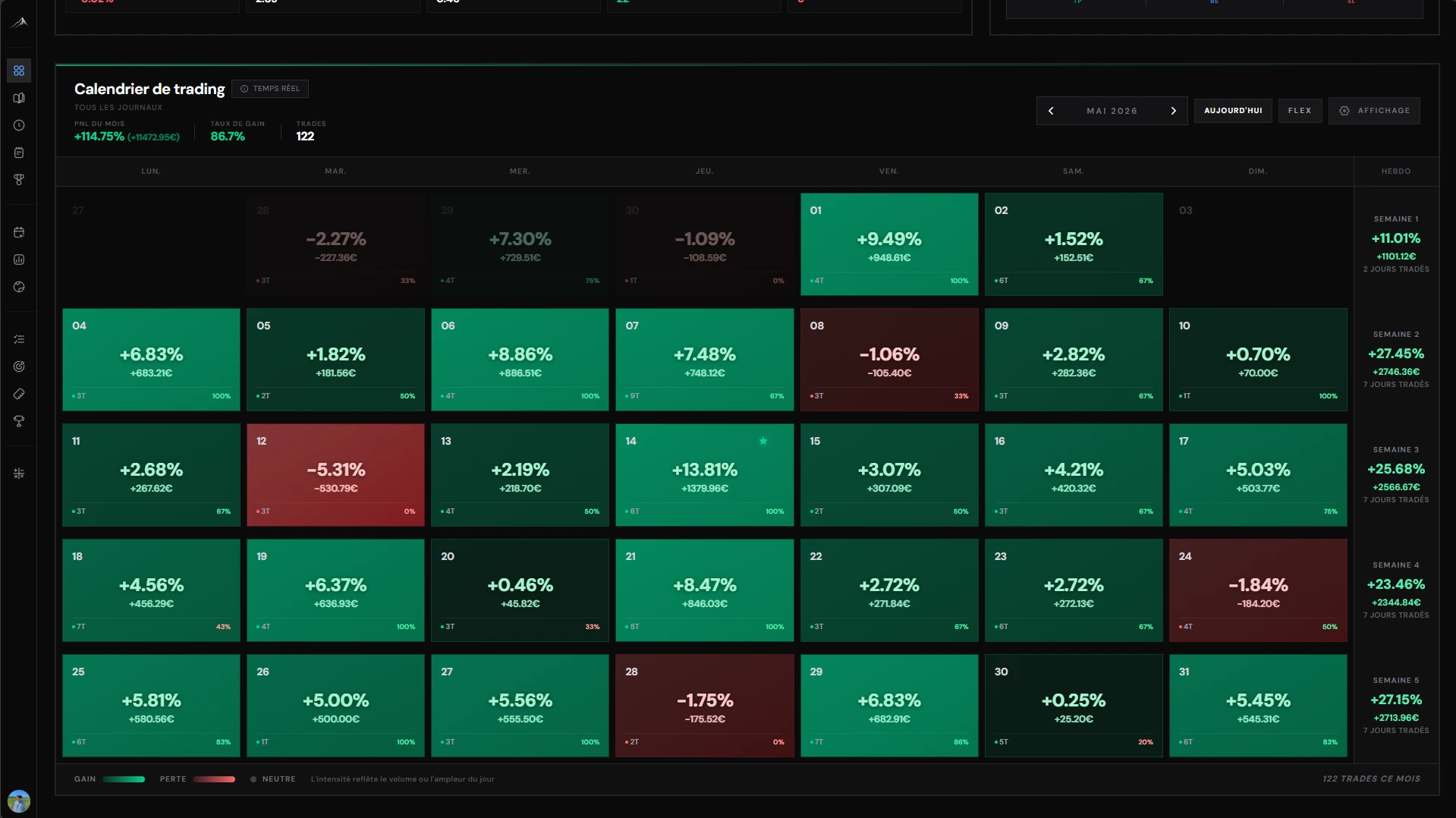
Quelles statistiques suivre dans son journal de trading
Win rate, expectancy, ratio risque/récompense, drawdown : ce que chaque métrique dit réellement de votre trading, et laquelle regarder en priorité.