Macroeconomics and trading: reading the economic calendar and anticipating markets
How macroeconomics moves markets, which events to follow, and how to turn the economic calendar into a discipline of preparation.
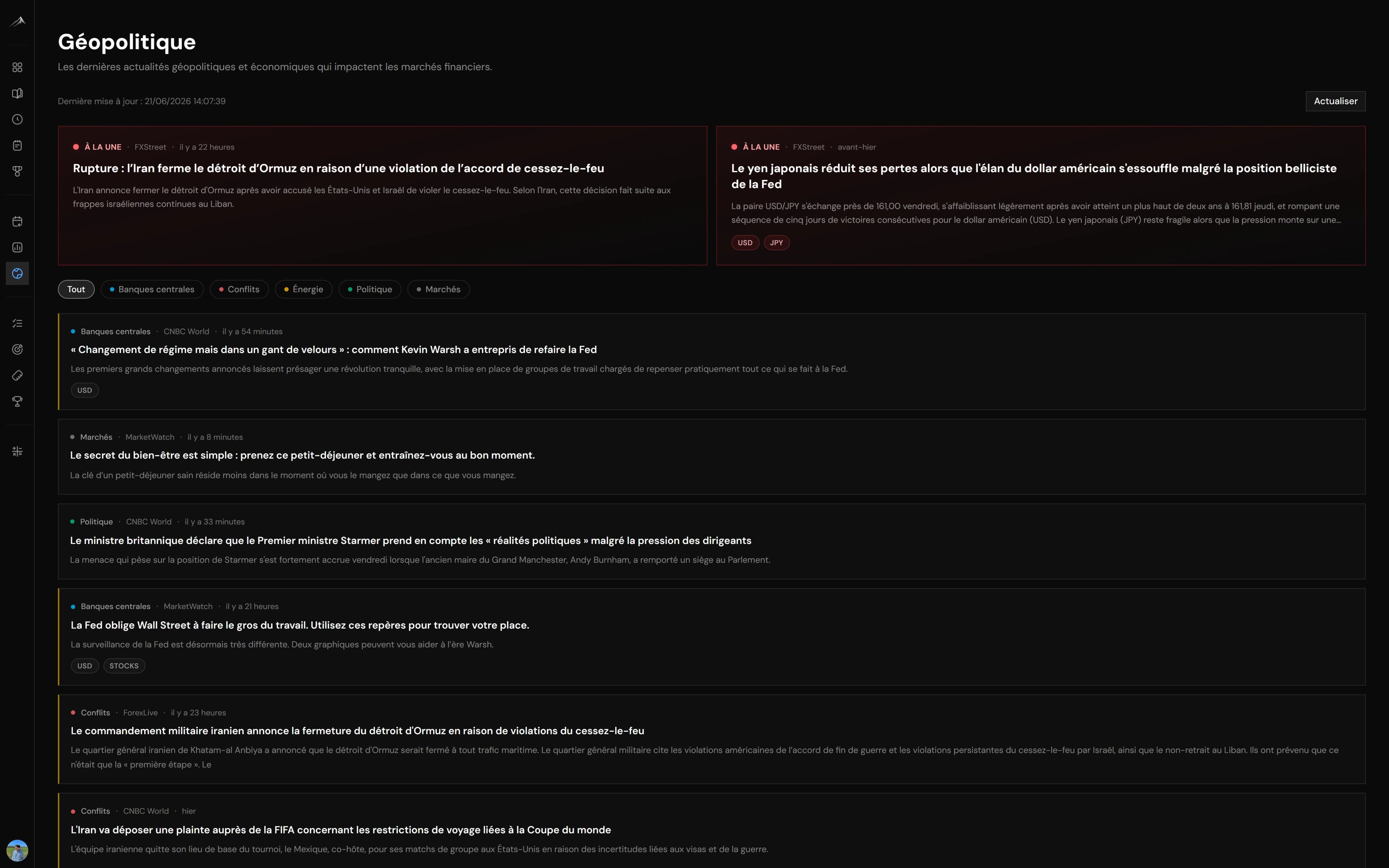
Macroeconomics sets the stage on which your trades play out. You do not trade indices or forex the same way on a rate-decision day and on a quiet day. Understanding macro is not about predicting: it is about preparing.
Why macro moves markets
Asset prices reflect expectations. When a macro figure (inflation, employment, rates) surprises relative to expectations, those expectations reprice abruptly — and the market moves. What matters is not the absolute value of the figure, but the gap with what was expected.
The events to follow first
- Rate decisions from central banks (Fed, ECB): the most structurally important macro event.
- NFP (US employment): heavy volatility on the dollar and indices.
- Inflation (CPI): steers rate expectations.
- Geopolitical tensions: a subject we connect to trading through Altiora's geopolitics feature.
Turning the calendar into a routine
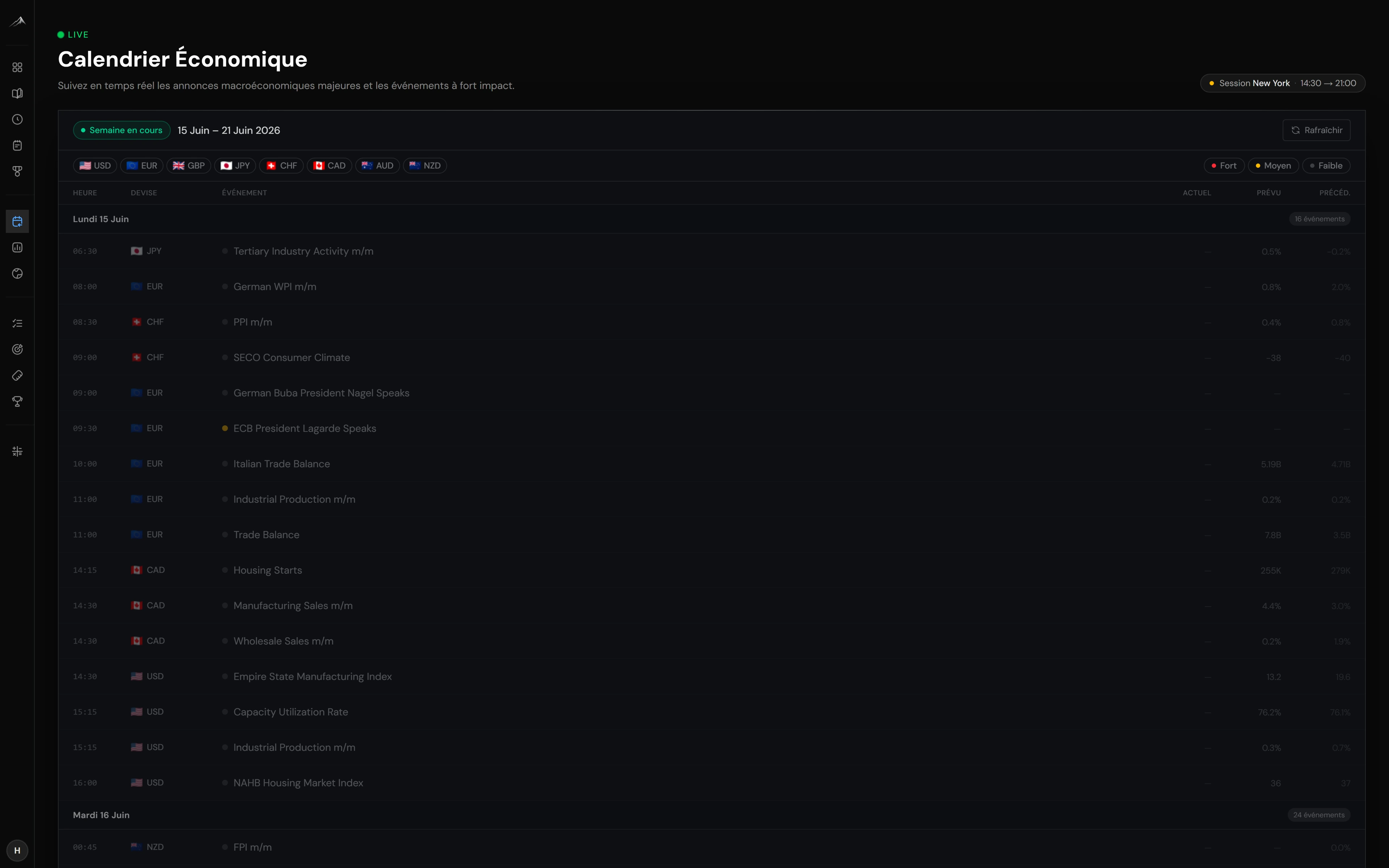
The economic calendar is not a prediction tool, it is a preparation tool. The good practice: every morning, spot the high-impact releases and decide in advance how you will behave (reduce size, don't trade around the release). That discipline is detailed in how to read the economic calendar, and fits into a morning routine.
Don't confuse macro with prediction
Nobody knows exactly how the market will react. The goal is not to guess, but to avoid being caught on the wrong foot. This is also one of the mistakes that sink a prop firm challenge: trading a release without preparation.
Following macro inside Altiora
Altiora includes an economic calendar and macro/geopolitical tracking so you can prepare your sessions without juggling ten tabs. See the features or try it free.
Frequently asked questions
- Should you trade macro releases?
- Trading the release itself (just before or during) is very risky because of widened spreads and slippage. Most retail traders do better avoiding the moment of the release and trading the trend that forms afterwards.
- Which macro events have the most impact?
- Central bank rate decisions (Fed, ECB), US employment figures (NFP) and inflation prints (CPI) are among the most decisive for forex and indices.
About the author
L’équipe Altiora
Altiora editorial team
Altiora's editorial team brings together active traders and the product team. We write about discipline, journaling and performance analysis, grounded in how the platform actually works. We never give investment advice.
Read next
This content is provided for informational and educational purposes only. It is not investment advice, a recommendation, or an incentive to trade. Trading involves a risk of capital loss. Altiora holds no funds and guarantees no results.