Economic calendar: how to read it and use it to trade
Impact, consensus, previous value: how to read an economic calendar and fold it into your preparation without trading it blind.
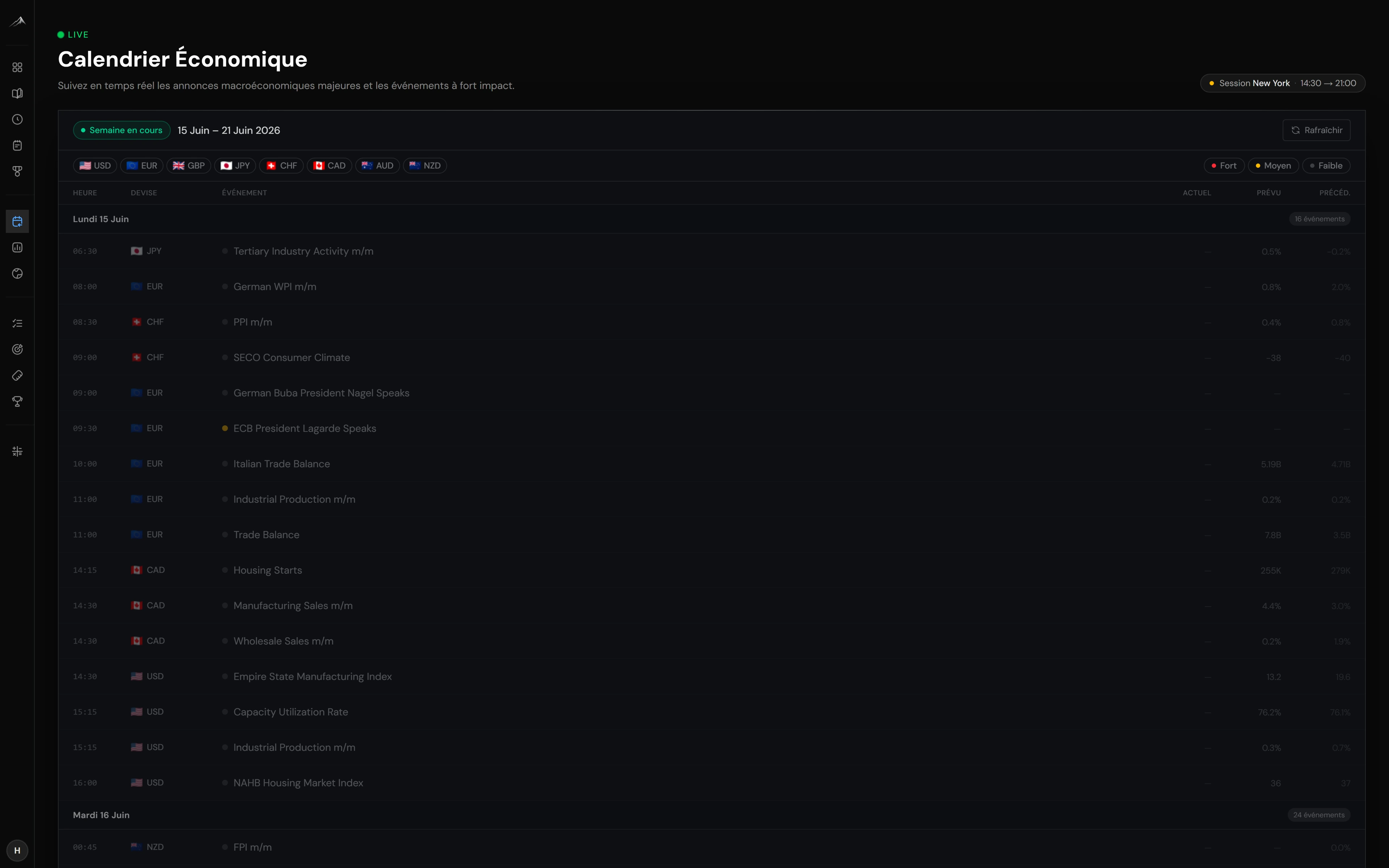
The economic calendar is an under-used preparation tool. Read properly, it keeps you from being surprised; used badly, it becomes a machine for losing money.
The columns to understand
- Impact: usually colour-coded (low, medium, high). Focus first on the high-impact events.
- Consensus (forecast): what the market expects. This is the reference point.
- Previous: the value of the last release.
- Actual: the published value, known at the moment of the release.
Market movement comes mostly from the gap between actual and consensus.
How to use it concretely
- Every morning, spot the day's high-impact events (see morning routine).
- Decide in advance how you will behave: reduce size, close sensitive positions, or don't trade around the release.
- Don't open a new position right before a major release: the spread widens and slippage becomes unpredictable.
The classic mistake
Many traders "play" the release, hoping for a big move in their direction. That is a bet, not trading. It is one of the causes of failure we list for prop firm challenges.
The full macro context
To understand why these releases move markets, read our pillar on macroeconomics and trading. Altiora embeds an economic calendar directly in your workspace — try it free.
About the author
L’équipe Altiora
Altiora editorial team
Altiora's editorial team brings together active traders and the product team. We write about discipline, journaling and performance analysis, grounded in how the platform actually works. We never give investment advice.
Read next

This content is provided for informational and educational purposes only. It is not investment advice, a recommendation, or an incentive to trade. Trading involves a risk of capital loss. Altiora holds no funds and guarantees no results.