How to backtest a trading strategy (the complete method)
The method for backtesting a strategy seriously: sample size, unambiguous rules, biases to avoid, and moving on to replay.
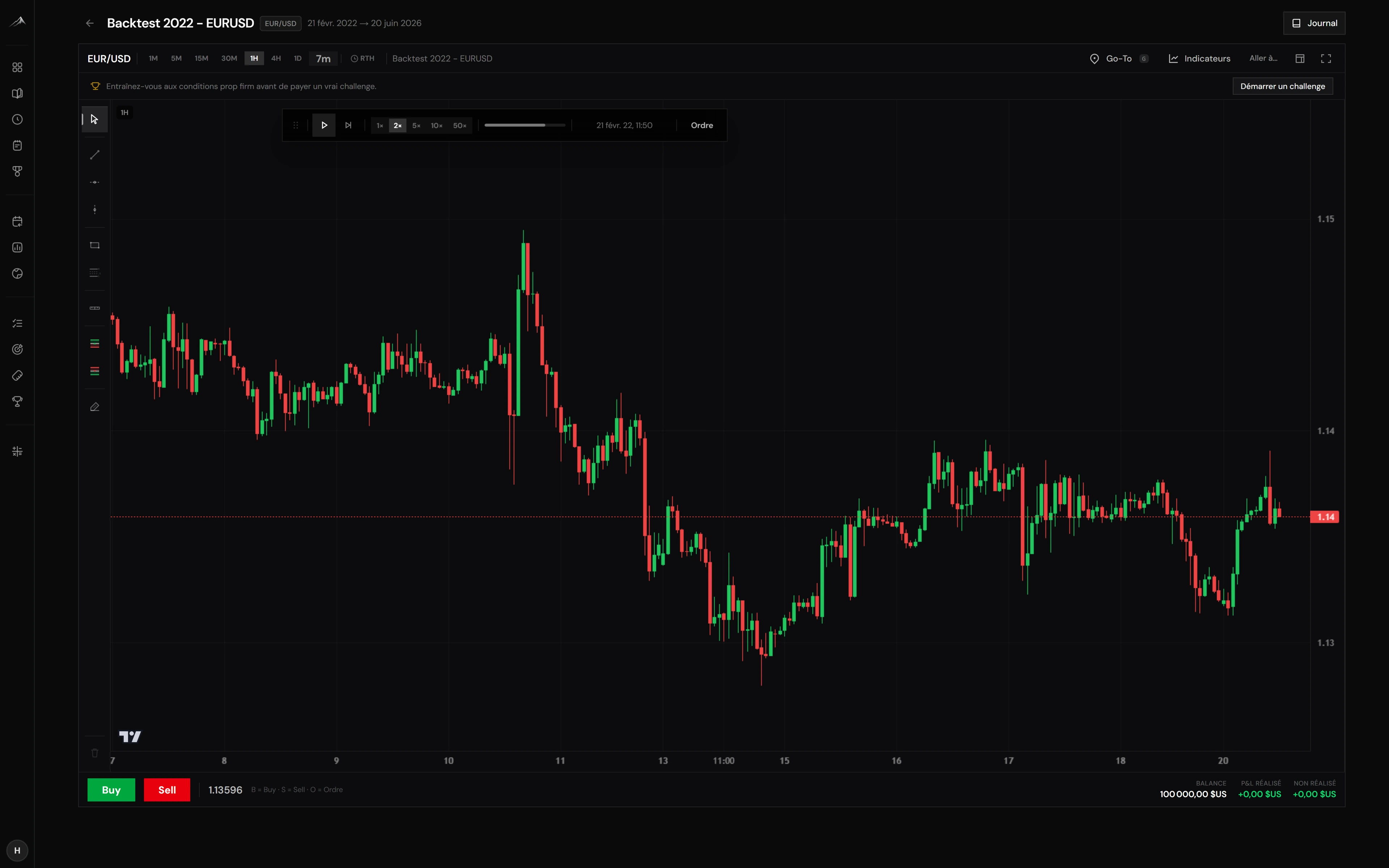
Backtesting means measuring whether a strategy has a statistical edge before you risk real money. Done badly, a backtest breeds false confidence; done well, it saves you months of losses.
1. Define objective rules
A backtestable strategy leaves no room for interpretation: entry conditions, exit conditions, position size and stop management must be written down in black and white. If two people cannot reach the same result, it is not testable.
2. Build a large enough sample
Ten trades prove nothing. Aim for at least 100 trades, ideally spread across different market conditions (trending, ranging, high volatility). An edge that only works in one market regime is not reliable.
3. Avoid the classic biases
- Survivorship bias: don't test only the periods that suit you.
- Overfitting: a strategy tuned perfectly to the past usually fails in the future.
- Hindsight bias: don't cheat by using information you would not have had in real time.
4. Move on to replay
A historical backtest must be confirmed by bar-by-bar replay, which recreates decision-making under realistic conditions. That is exactly what Altiora's backtesting and replay module offers, with journal and analytics built in — see the features.
5. Journal your backtests
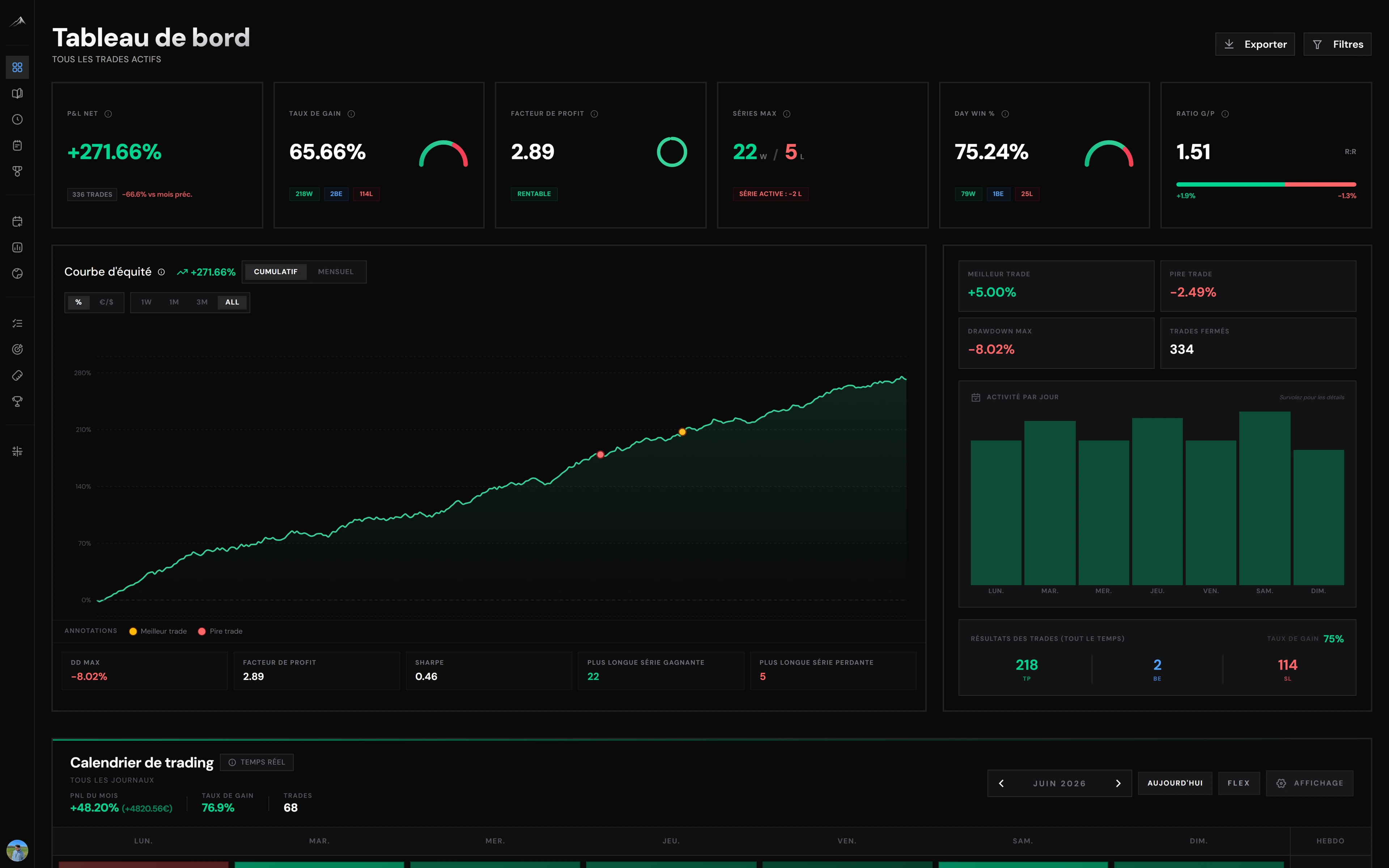
Treat your backtests as real trades: log them, measure expectancy, compare setups. The logic is the same as in the trading journal guide. Try it for free.
About the author
L’équipe Altiora
Altiora editorial team
Altiora's editorial team brings together active traders and the product team. We write about discipline, journaling and performance analysis, grounded in how the platform actually works. We never give investment advice.
Read next
Notion trading journal vs software: which should you choose in 2026?
Notion is flexible and free to start. Software cuts entry time and stabilizes stats. Here is when to stay on Notion, and when to migrate.

MT4 / MT5 trading journal: import and track MetaTrader trades
If you trade on MetaTrader, your MT4 or MT5 journal should not depend on typing every fill by hand. Here is how to import trades, what usually breaks, and what to demand from a tool.
Best trading journal software in 2026: the full comparison
How to choose trading journal software in 2026: objective criteria, a comparison of the options, and why language and ecosystem matter.